Day in the life of
Farmer – Garth Brown
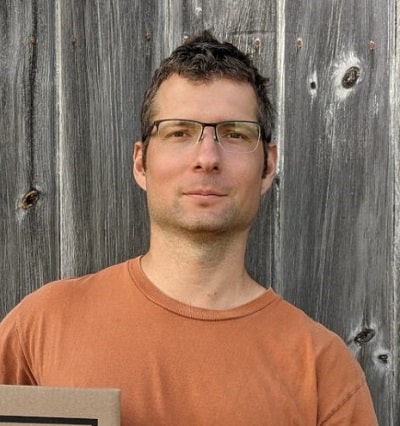
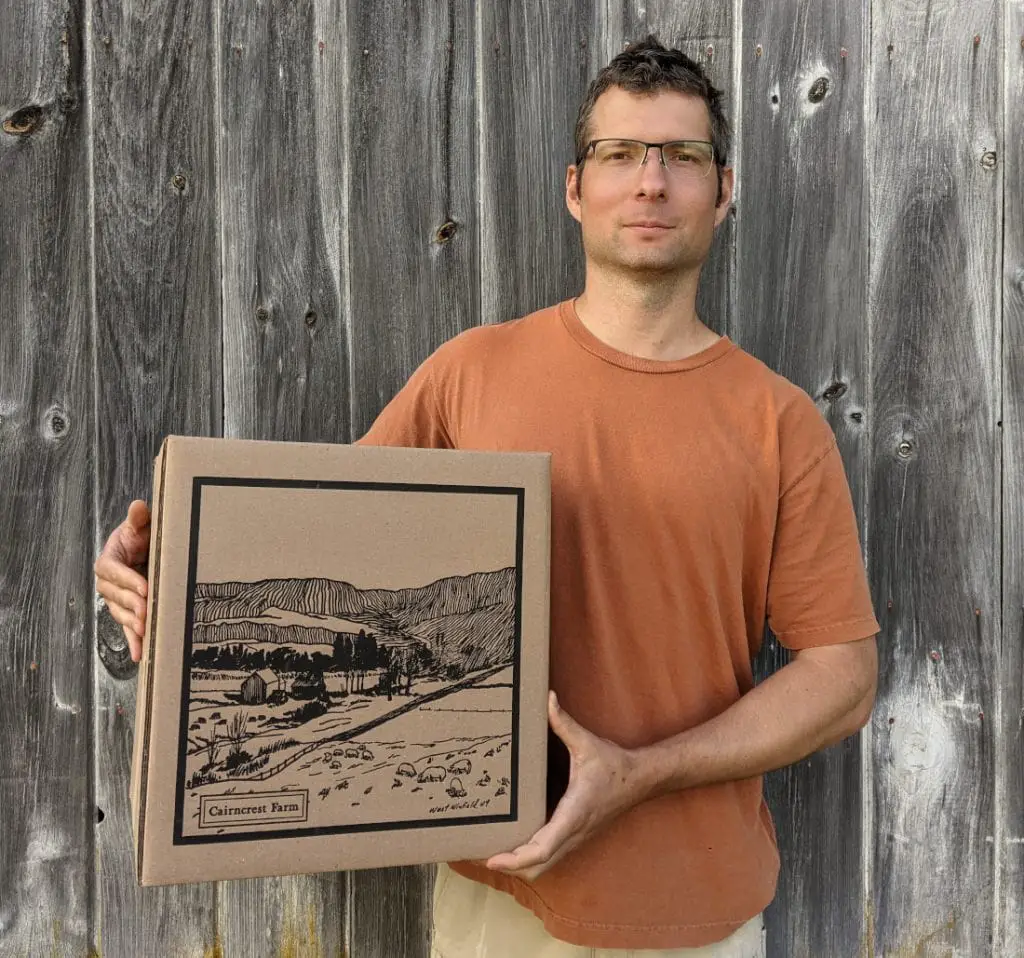
My name is Garth Brown. Along with my wife Alanna, my brother Ed, and my sister-in-law Normandy I own Cairncrest Farm, located in the very center of New York state.
My specific responsibilities focus on logistics, like packing and shipping orders to customers, and marketing, which mostly means managing the farm website, but I also help out with the livestock.
Credit: Normandy Alden
My typical day
One exciting thing about farming is that days are rarely typical, but I’ll do my best. For most of the morning, I’m in the walk-in freezer, organizing and managing inventory, and then I update the website.
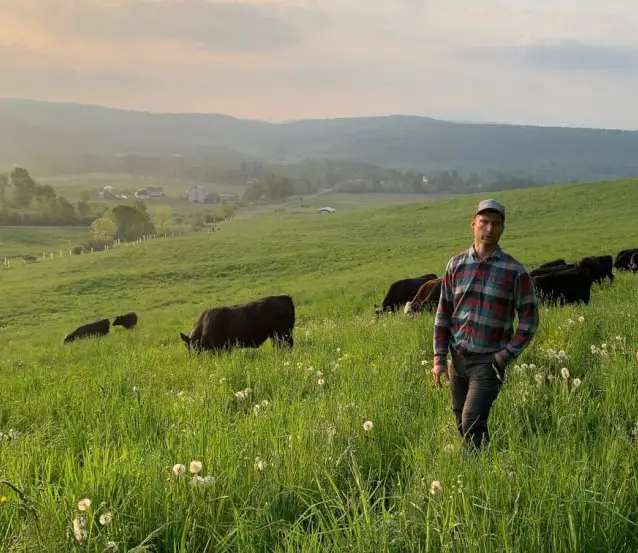
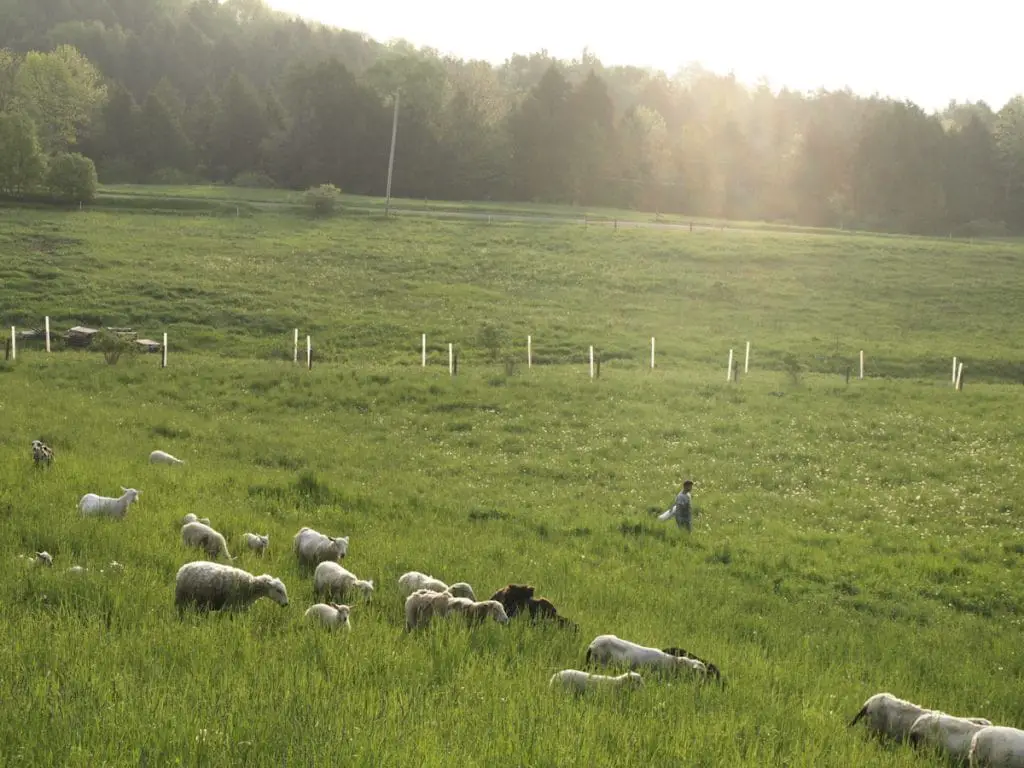
A big part of my job is education, so after lunch, I’ll work on a blog post about the best way to manage grazing a herd of sheep. Then my brother Ed needs help sorting cattle, which will take the rest of the day. Other days I’ll spend more time packing orders, talking to customers, building fences, or any number of other things.
Credit: Normandy Alden
Pros
The biggest pro of my job is that I work in an absolutely beautiful place, and I work from home. While some people might find this distracting, I really enjoy it. I love being around animals, and I get a great deal of satisfaction from connecting people directly with the farm that raises their food and writing about agriculture.
Cons
There are definitely some cons. When I got into farming I didn’t realize how much of my time would end up being spent on marketing and education. I’ve come to enjoy this very much, but it isn’t all hanging out in nature. And I’m not exceptional in this – the reality of farming in America is that It’s nearly impossible to start a farm selling a commodity like corn or fluid milk to a big plant. It simply costs too much money to get the land and equipment to break into these areas. This means the most viable economic model for a beginning farmer is retailing direct to the public, and this in turn means that marketing and interaction with customers are every bit as critical to the farm’s success as knowing how to raise a crop or graze cattle.
Credit: Normandy Alden
Advice to aspiring farmers
There are a few paths to take to get into more commercial farming, one that would not seek farm ownership. I suspect that, given advances in technologies – self-driving machinery, milking robots for dairy cows, perhaps even robotic spot weeders and harvesters for vegetables, though these are farther off – the future of this sort of farming is pretty high tech/managerial or maintenance/mechanical. I can’t really speak to it in detail, but it’s definitely something else you might want to run down if you aim to give a comprehensive view of agriculture as a career. I can say from experience writing checks that tractor technicians are very well paid!
With that caveat out of the way, here’s some more particular advice for anyone interested in pursuing smaller scale farming.
Talking to farmers
It’s probably worth doing for any field of prospective employment, but talking to farmers is a great way to get a sense of what’s involved. Most farmers are happy to talk to anyone who’s interested, and most will be candid about the prospects and difficulties of their particular corner of agriculture.
Internships
As with any business, internships are a great way to get a sense of what is actually involved in the day to day operations. But it’s worth being particularly cautious when it comes to farming internships since some farmers see interns primarily as a source of unpaid labor. Hard work is fine, but make sure the internship is clear about expectations. You should have a good idea of what you will learn in the process. Avoid any farm that runs an internship program that requires illegal working hours or does not have clear guidelines that give you a good idea of what you’ll learn in the course of your internship.
Internships can be a stepping stone to a more formal career. Particularly around large cities, there are often mid-sized farms, some for profit some not, that can offer job stability as a herd manager, farm manager, marketer, or other stable job. Publications like Graze, Stockman Grass Farmer, Acres USA will often have listings.
Starting a farm from scratch
If it comes to starting a farm from scratch, there are many of the same considerations that arise when beginning any small business. So taking classes on the basics of business planning would be a great idea – many people come into farming without a real plan for how it will operate as a business. If the plan is to sell directly to the public, then taking classes that will help prepare for this, such as marketing and basic website design, would be a good idea.
Like starting any business, starting a farm from scratch is hard and risky. The most important thing to have going in is some experience working on a profitable farm, hopefully one with the same model you hope to copy. While there’s lots of good info in books, there’s no replacement for firsthand experience working on a farm.
The biggest hurdle to starting a farm is often land access. While there’s no simple solution to this, there are possibilities beyond trying to buy land. Landowners, whether in the country or closer to towns, often want their land farmed for tax or aesthetic reasons, and many will offer quite good terms. This is the best option for most beginning farmers, but be very careful about the terms of a lease – a handshake agreement is not good enough! Expectations around management practices, procedures for early termination of the agreement, and all the other details that may be points of conflict should be spelled out ahead of time.
This relates to what I said a minute ago, but it’s worth repeating. Having a clear business model with a clear idea of who the farm’s customers will be and how it will find them is paramount. A farm will fail if it does not have a market for what it’s producing, no matter how well it’s run!
Another pitfall is doing too much. Many books tout the benefits of interlocking farm enterprises – having vegetables and sheep and laying hens all on the same land. While there’s truth to this, I had to learn from hard experience that it’s better to focus on doing a few things really well rather than doing many things to a mediocre standard. There is a baseline of efficiency that must be met, and the more complex the operation the more difficult this is, especially at a small scale. No farm can do everything. There’s real value in doing less and doing it better.