
Salary, Job Description, How To Become One, and Quiz
What is the job like

At the beginning of the season in February, the hibernating breeding snails are woken and encouraging to start breeding. They are housed in a temperature and humidity controlled room on specially designed tables. The work involves cleaning the tables daily and feeding. Then collecting the pots of soil which are laid out especially for the snails to lay their eggs.
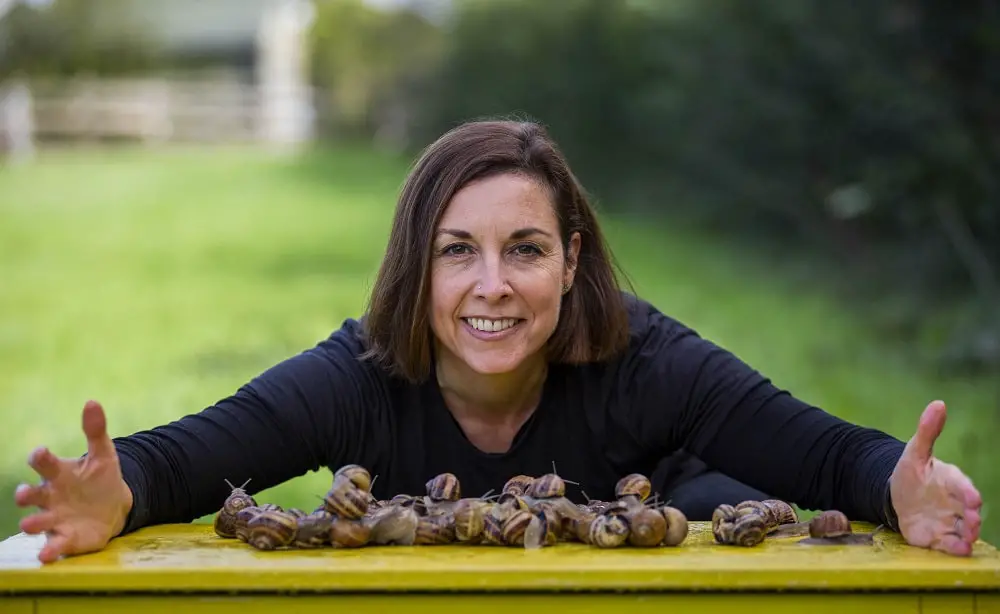
Eggs are then collected and put into incubation trays. The trays are sprayed with water daily until the eggs hatch.
Baby snails are then put into a polytunnel on specially designed tables. They are fed and watered daily whilst they grow.
In the meantime another job is to prepare the outdoor snail beds, rotivating the soil, setting up the small electric fencing, and planting the brassica leaves which snails love to eat.
Snail pallets are cleaned and placed into the beds, ready for the juvenile snails when they come outdoors in May.
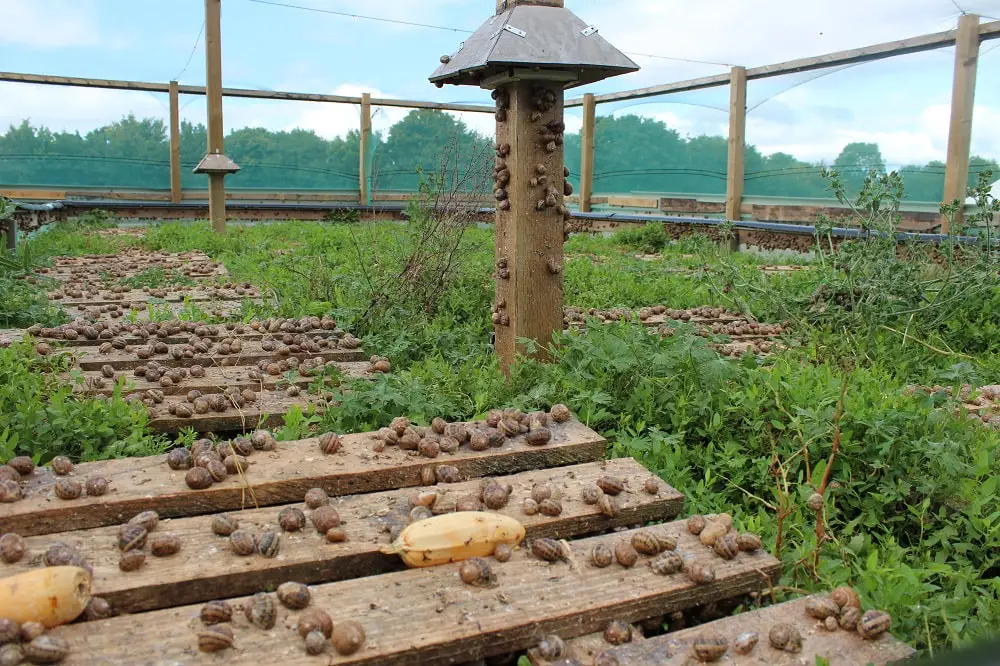
Daily tasks are then feeding and watering snails and moving juveniles from the polytunnel to outdoors, whilst continuing to collect eggs, etc. Plus maintaining the outdoor area – weeding paths and re-sowing the brassica leaves.
At the end of the season around Sep/Oct, the fully grown snails are harvested. This means picking them by hand and sorting by size. They are then put onto purging tables – the breeding tables repurposed. The conditions for hibernation are created and the snails seal themselves into their shells, where they stay over the winter.
The rest of the job is packaging up snails to send out to restaurants and reptile breeders (reptiles like to eat snails).
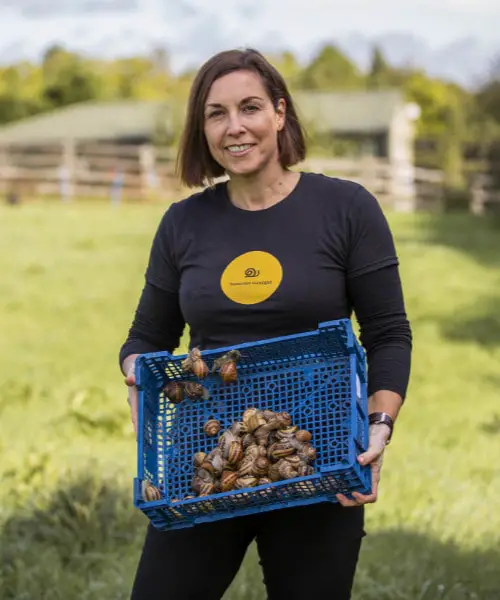
We also run a ‘Snail School’ where we train budding snail farmers, teaching them about the snail farming cycle, advising on what infrastructure needs to be built and helping with business development. If anyone would like to talk to us about snail farming, they’re very welcome to get in touch.
Pros
- This is a very niche business, which makes it exciting, but it also means we are developing a market for our product.
- Compared to a lot of other businesses, the set up costs are not too high and once you have a stock of snails it’s possible to increase your stock very quickly.
- Snail meat is very high in protein and low in fat and carbs, and as a sustainably farmed food source, we believe it’s a product that will meet our increasing demand for finding alternative sources of protein.
- The British climate works really well for farming snails.
- It’s really satisfying collecting the eggs and seeing the hatchlings emerge.
- The manual aspect of the job is very light – there’s not much lifting, or strength needed.
- Set up with a persons needs in mind this is an outdoor job that could really easily be adapted for someone with additional physical needs, eg. wheelchair use.
Cons
The cons of the job at the moment – there aren’t really many.
- Dead snails smell pretty gross, but then there are many unpleasant smells when working with animals and nature!
- Most people who own a snail farm own their own business, so earning a living depends upon selling the snails. This is both exciting and frustrating because it’s a market we’re establishing at the moment.
- I really enjoy the prospect of inspiring people to try eating something different, the fact that it’s a potential future protein source, etc. But that does mean that demand for snails is lower at the moment in the UK than in other European countries. But, in my opinion, that’s what makes it ripe for doing something new and exciting, there’s so much potential – eating snails and the caviar and their slime has healing properties and is really good for your skin, there’s also a market for snails as food for pet reptiles and even as fishing bait! As we build the market it does mean that running a snail farm is unlikely to be someone’s main income source in the first few years, but it’s exciting to be building something.
.jpg)
.jpg)
.jpg)
.jpg)
.jpg)
.jpg)
.jpg)
.jpg)
Don’t know which career to pursue?
Take the career quiz to find careers that match your personality type.
Take The Career Quiz